Towards the end of May, E-RIHS attended the Symposium “ANTECIPA 10 Years: Legacies and Horizons of Heritage Science in Brazil” to celebrate a decade of operations of the National Association for Research in Heritage Technology and Science (in Brazilian, Associação Nacional de Pesquisa em Tecnologia e Ciência do Patrimônio – ANTECIPA).
The event took place in Belo Horizonte, Brazil, bringing together international guests, including E-RIHS ERIC Director General Vania Virgili and the National Nodes Committee Vice-Chair Emilio Cano. The attendees were warmly guided by the organisers, Professors Luiz A.C. Souza and Willi de Barros Gonçalves. The core idea of the symposium was to start from the trajectories built to project the technological challenges that will shape the next decades; this, to reaffirm the commitment to contribute to a researchers network and the production of excellent scientific research (details of the programme are available in EN here)
Although Brazil is not currently a member state, the ANTECIPA and E-RIHS collaboration dates back 10 years: a friendship which has evolved into current joint actions that seek to shape future perspectives.
It all started in 2015 when ANTECIPA was founded during an IPERION meeting (the European project that, together with other European projects, represents the background of E-RIHS) at the Federal University of Minas Gerais. Three years later, in 2018, ANTECIPA was legally registered and has since been consolidating itself as a transdisciplinary forum for Heritage Science in Brazil.
At present, the relationship between E-RIHS and ANTECIPA is formalised through a Memorandum of Understanding (MoU) signed on October 11th, 2024, which defines their mutual cooperation to advance Heritage Science. The MoU has been signed ahead of the International Day for Disaster Risk Reduction (celebrated every year on October 13th) to underscore the importance of international cooperation on cultural heritage in the context of climate change and human impacts.
The ANTECIPA association once more demonstrated a great interest and sensitivity to these themes. A full day of the Symposium week was dedicated to visiting the Brumadinho Memorial and the Katurama and Naô Xohã villages, where a small community of the Pataxó people has found a new but still threatened place to live. Two visits that will remain in the memory and heart of all participants.
Brazil has a lot to tell about heritage: from art, in all its shapes and forms, to biodiversity, passing through environmental restoration and protection of indigenous communities’ legacy. Favouring collaborative networks, ANTECIPA has been seeking to promote Heritage Science in Brazil and inspire new generations of specialists dedicated to safeguarding cultural assets. This ten-year milestone serves not only as a retrospective but as a starting point.
Throughout this Symposium, ANTECIPA showed great consideration for E-RIHS ERIC activities and friendship: well-remembered was the role, ideas and personality of Professor Antonio Sgamellotti (1939-2025), who dedicated his life with great enthusiasm to science and art, including pioneering the Mobile Laboratory (MOLAB), and to whom both Vania Virgili and Luiz A.C. Souza dedicated their speech for celebration and commemoration.
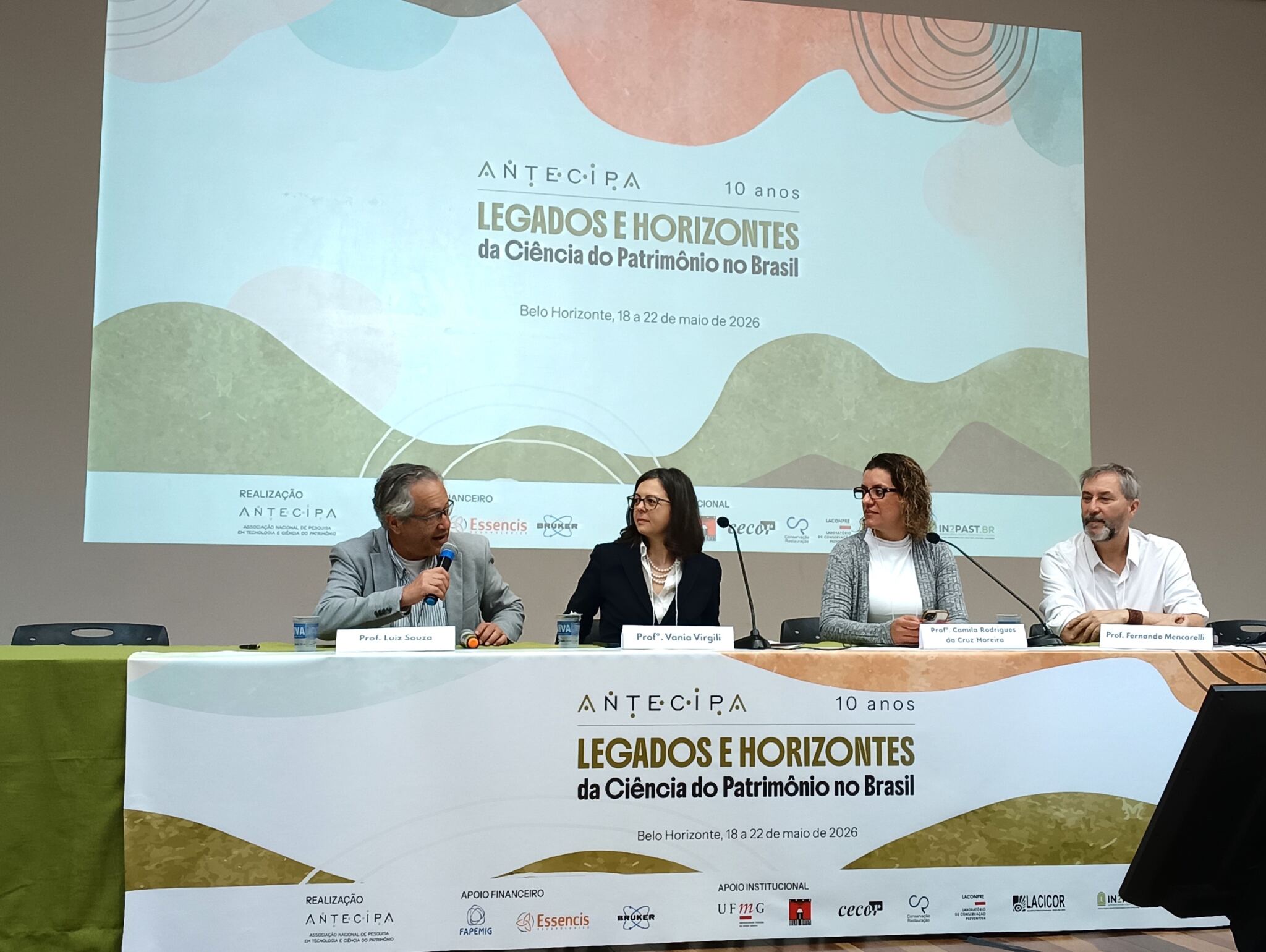
ANTECIPA opening speakers
Prof. Luiz AC Souza, opening the Symposium with Prof. Camila Rodrigues da Cruz Moreira and Prof. Fernando Mencarelli, introducing E-RIHS Director General Vania Virgili. Credits: Federica Baldassari
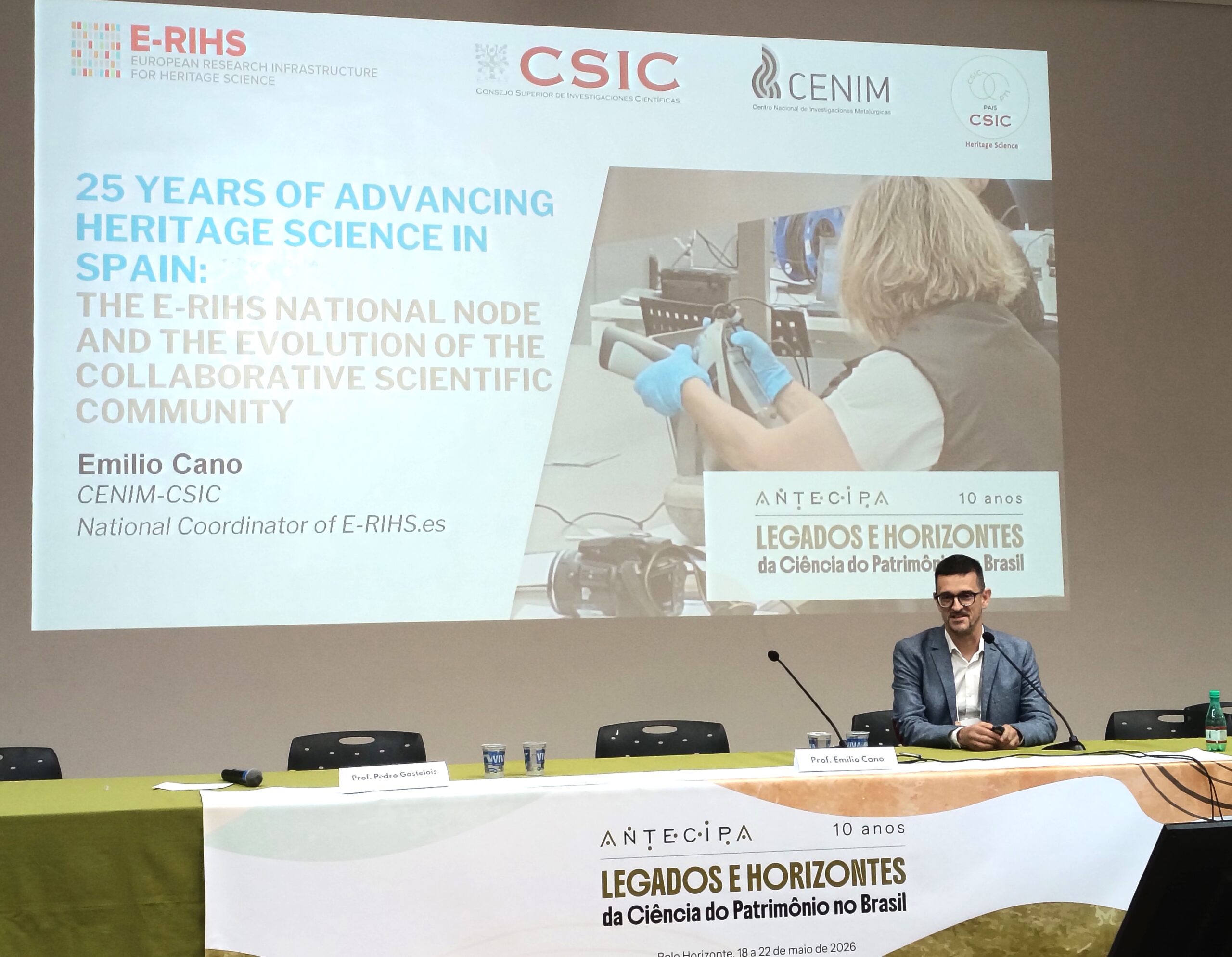
Emilio Cano presenting – ANTECIPA
Prof. Emilio Cano (E-RIHS National Node Committee Vice Chair and Spanish National Node Coordinator), during his presentation at the ANTECIPA symposium. credits: Federica Baldassari
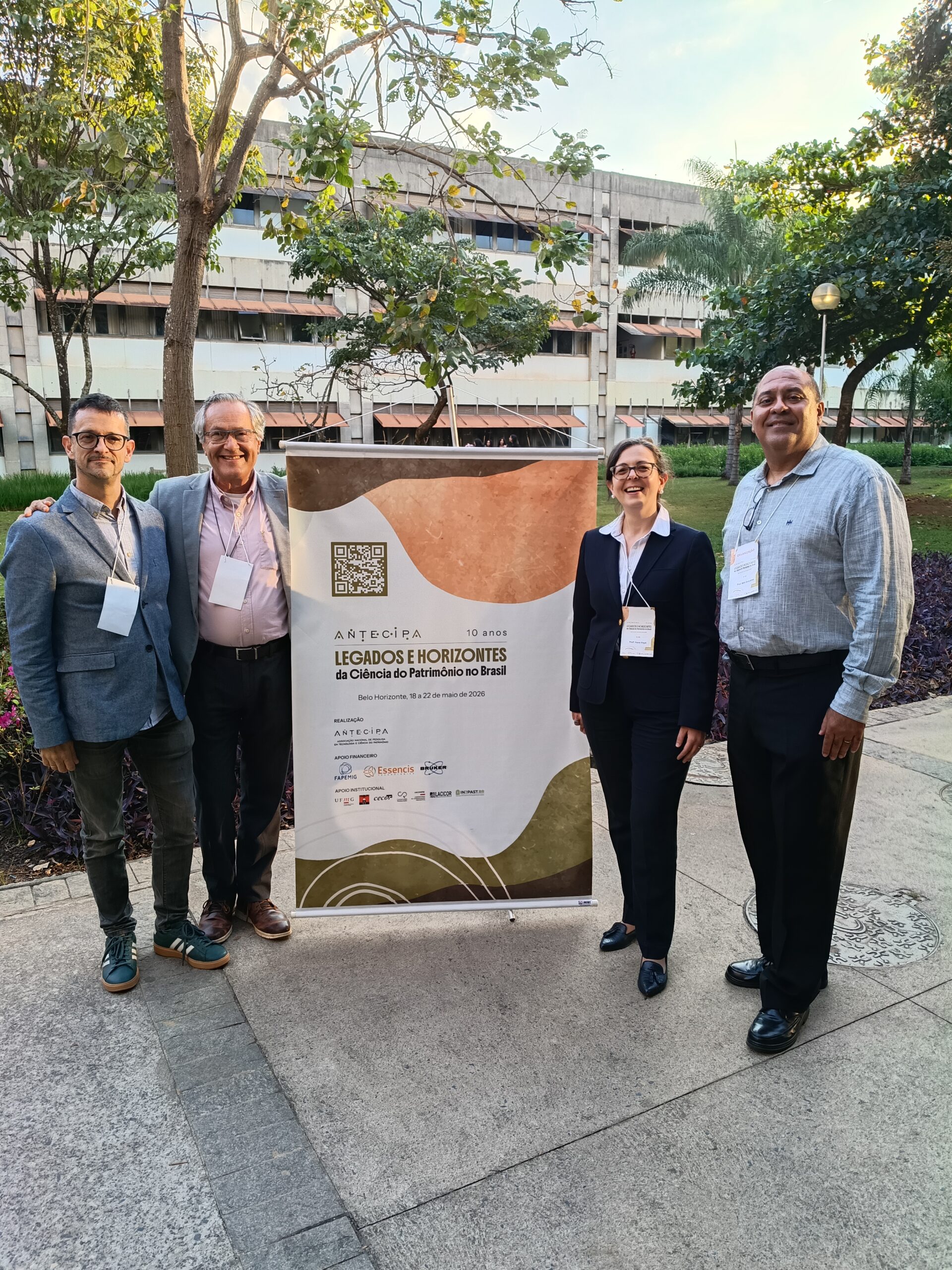
ANTECIPA&E-RIHS
From left: Prof. Emilio Cano, Prof. Luiz AC Souza, E-RIHS Director General Vania Virgili and Prof. Willi de Barros Gonçalves standing next to the ANTECIPA poster under the sunset light at the Federal University of Minas Gerais. Credits: Federica Baldassari
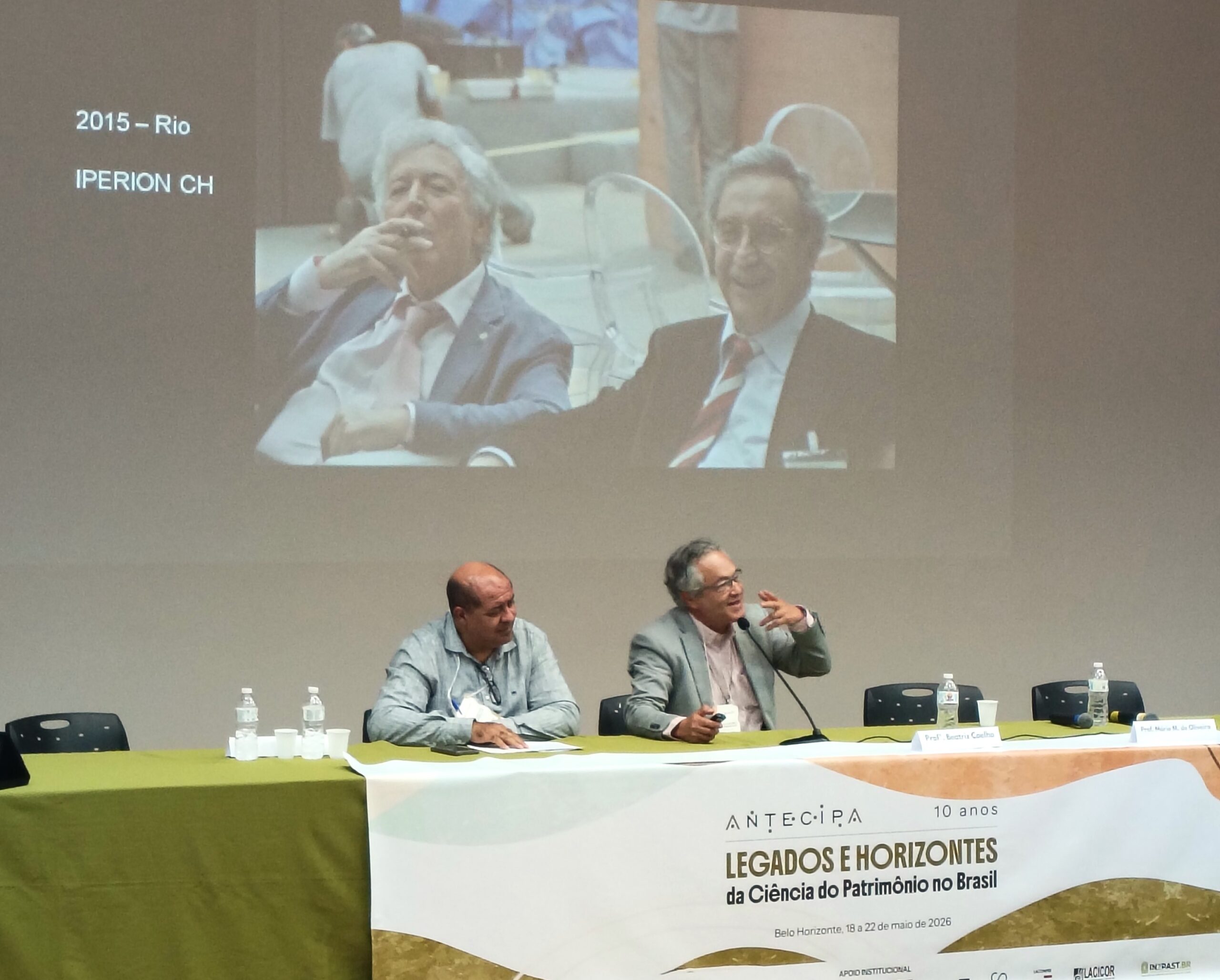
Honouring Prof. Sgamellotti
From left: Prof. Willi de Barros Gonçalves and Prof. Luiz AC Souza during the closing presentation of the Symposium. The photo displayed in their presentation shows, from left: Prof. Antonio Sgamellotti and Prof. Piero Baglioni (University of Florence) during the IPERION-CH meeting in Rio de Janeiro. Credits: Federica Baldassari
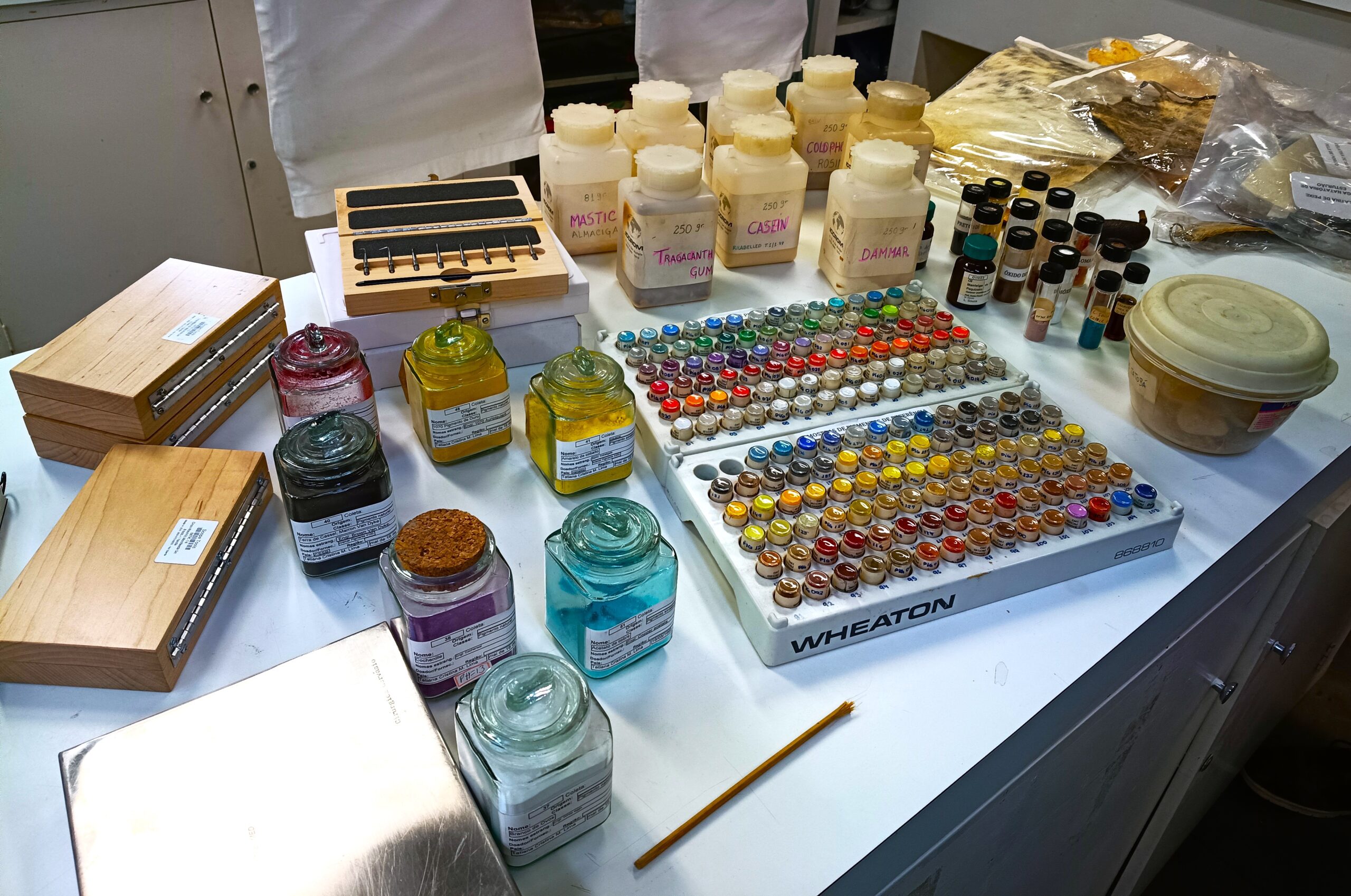
Prof. Souza Lab – ColourArchive
Prof. Luiz Sousa laboratory. In the frame, a portion of the colour powders archive used for Heritage Science studies. Credits: Federica Baldassari
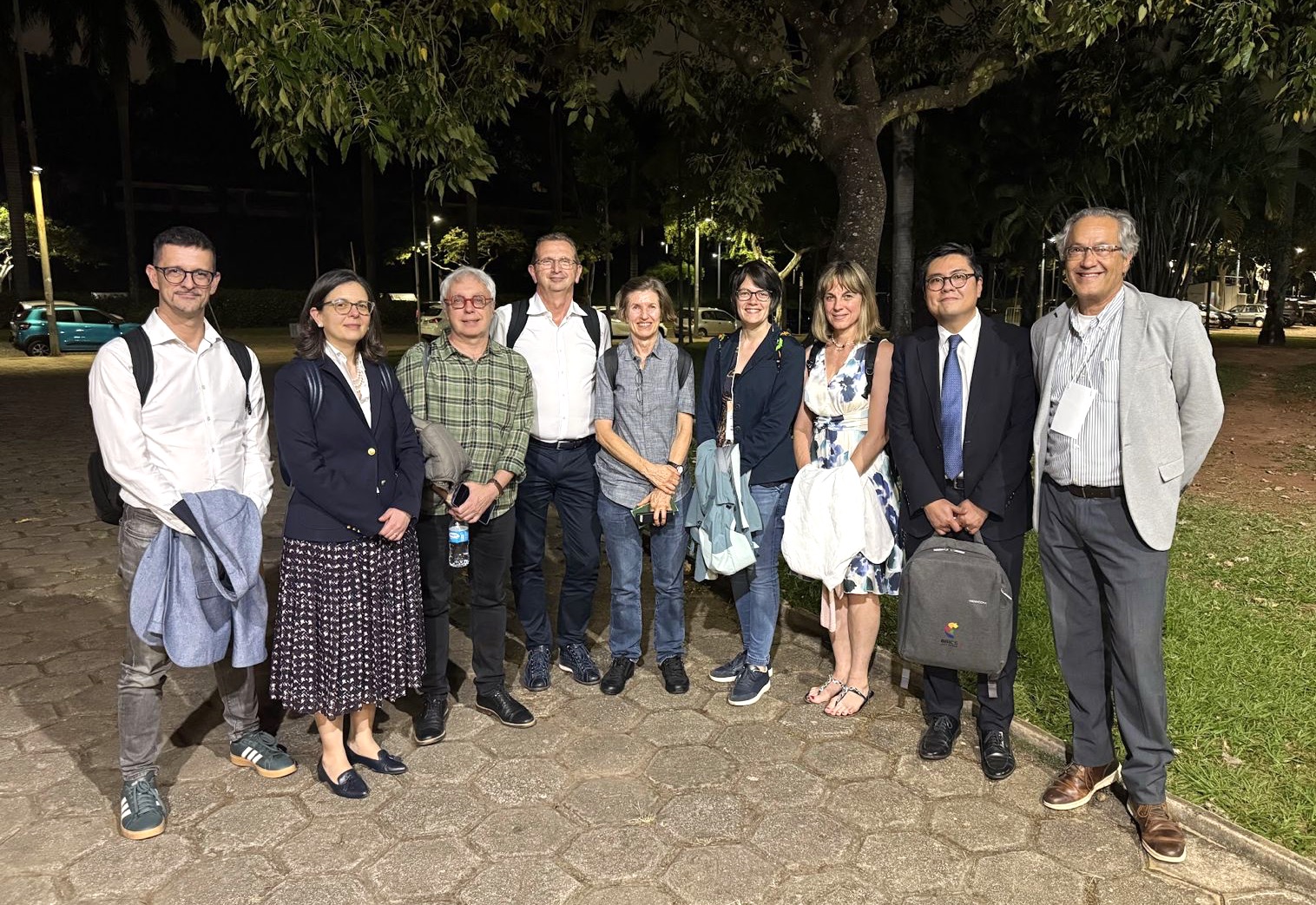
Group picture with Carlos Eduardo Higa Matsumoto
From left: Prof. Emilio Cano, E-RIHS Director General Vania Virgili, Prof. Nicola Schiavon (ARCHMAT Program), Dr. Luca Pezzati (ARTEMIS Project), Prof. Karla Balzuweit (UFMG), Dr. Federica Baldassari (E-RIHS Central Hub), Dr. Jana Striova (ARTEMIS Project), Carlos Eduardo Higa Matsumoto (Special Advisory for International Affairs ASSIN / MCTI). Prof. Luiz AC Souza. Credits: Prof. Willi de Barros Gonçalves
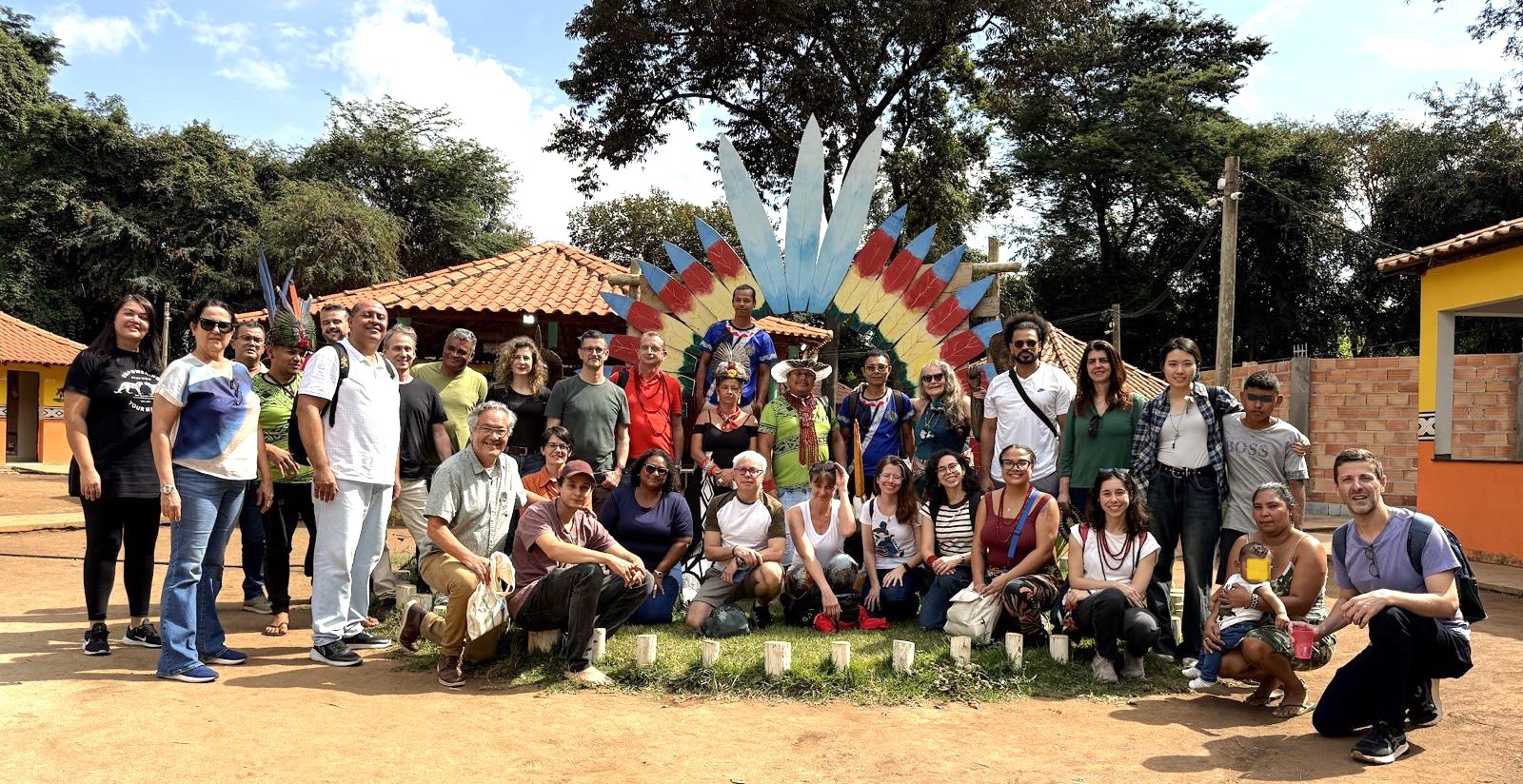
Pataxó community
Visiting the Pataxó community in the Katurama village