A strategic agreement has been signed bringing together the Directorate-General for Digitalisation and Communication of the Italian Ministry of Culture (DGDC–MiC), the National Research Council Institute of Heritage Science (CNR ISPC), and the European Research Infrastructure for Heritage Science, European Research Infrastructure Consortium (E-RIHS ERIC). The aim is to launch a joint collaboration program focused on strengthening and enhancing tools, infrastructures, methodologies, and collaborative processes in the field of cultural heritage.
The agreement marks a strategic step toward strengthening synergies among European research infrastructures, national research organisations, and public institutions, in line with national and European priorities for the digital transformation of the cultural sector.
What Will Change in Practice? Key developments of the agreement
At the heart of the agreement is the ambition to transform the way we study and preserve cultural heritage through five key pillars:
- Systems “Speaking” the same language: The goal is to ensure interoperability between the Ministry’s information systems and the digital infrastructures of research laboratories. This will make scientific information—from diagnostic analyses to restoration data—accessible, shareable, and fully usable for the study, protection, and enhancement of cultural heritage.
- Artificial Intelligence for Cultural Heritage: Advanced digital tools and AI-based solutions will be developed to make better use of research data. Imagine intuitive interfaces that help experts monitor the condition of a statue or painting in real time.
- Italy as a leading player in Europe: Thanks to this agreement, Italy will coordinate its actions with major European initiatives. The partners will jointly participate in international funding calls, bringing additional resources and expertise to the cultural heritage sector.
- Training professionals: Technology is evolving rapidly, and new skills are needed. Innovative training programs will therefore be created to develop a new generation of professionals capable of using digital tools and methodologies for the protection, management, and promotion of cultural heritage. Research should not be limited to a select few. The parties will use AI to make research results accessible in multiple languages and will engage citizens through “citizen science” initiatives, making cultural heritage truly inclusive and participatory.
A Commitment to the Future
The agreement was signed by Andrea De Pasquale (Director General DG DC MiC), Costanza Miliani (ad interim Director CNR ISPC), and Vania Virgili (Director General E-RIHS ERIC). It will initially run for three years. To ensure effective coordination, a dedicated committee will meet regularly to plan activities and monitor results. The initiative is part of broader national and European strategies aimed at building a connected digital ecosystem. It will contribute to the development of infrastructures such as the Common European Data Space for Cultural Heritage (Data Space), the European Collaborative Cloud for Cultural Heritage (ECCCH), and the European Open Science Cloud (EOSC), while promoting integration among platforms, data, and infrastructures to strengthen the interoperability and accessibility of cultural heritage.
DG DC – MiC https://dgdc.cultura.gov.it/
dc.comunicazione@cultura.gov.it
E-RIHS ERIC https://www.e-rihs.eu/
communication@e-rihs.eu
CNR ISPC https://www.ispc.cnr.it
ispc.socialboard@ispc.cnr.it
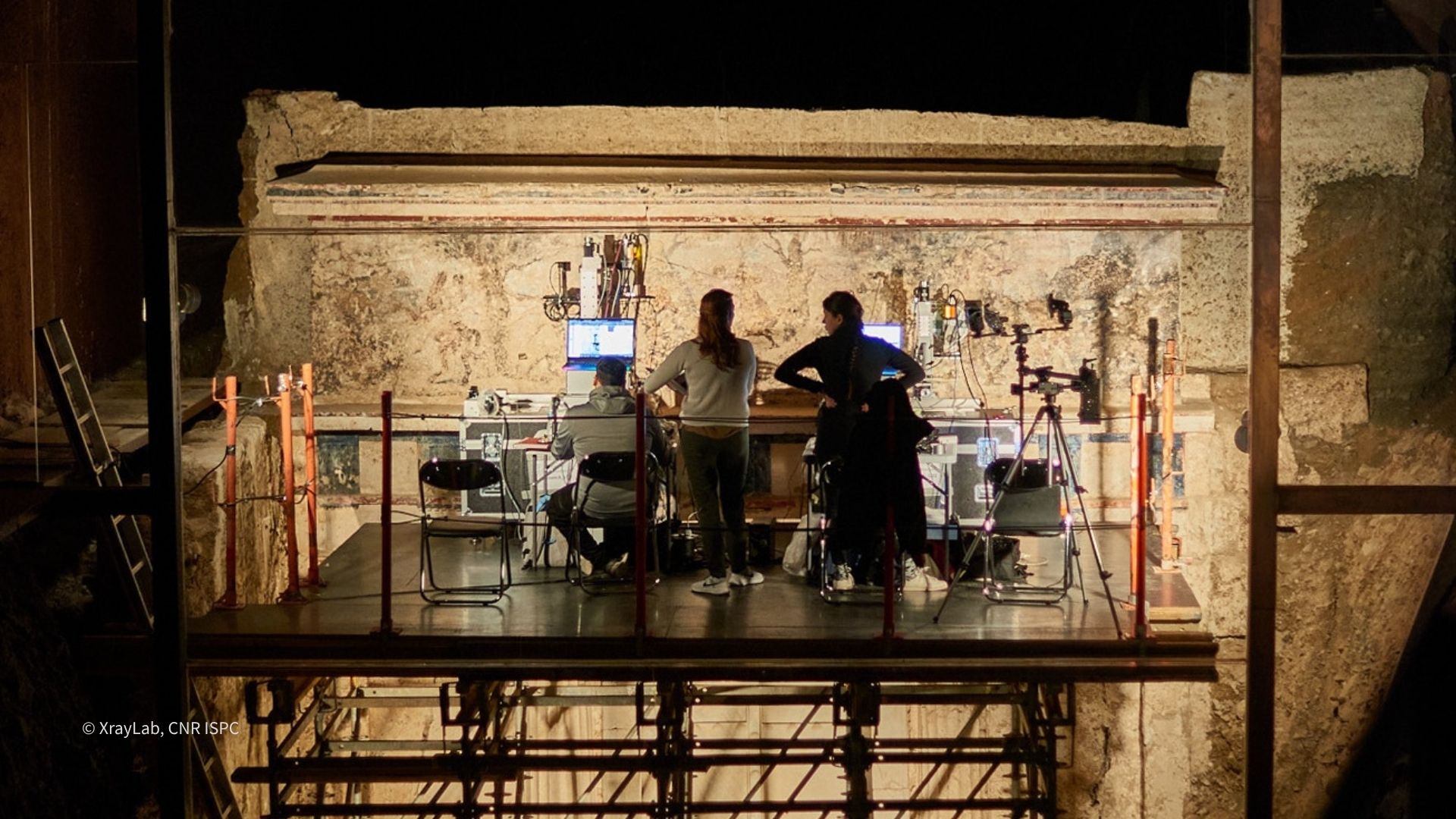
E-RIHS.it Campaign – MOLAB by the XRAYLab CNR ISPC team on the access scaffolding to the frieze of the tomb of King Philip II at Verghina, Greece. Two simultaneous X-ray techniques (MA-XRF and MA-XRD) were used during the activity. | © CNR ISPC
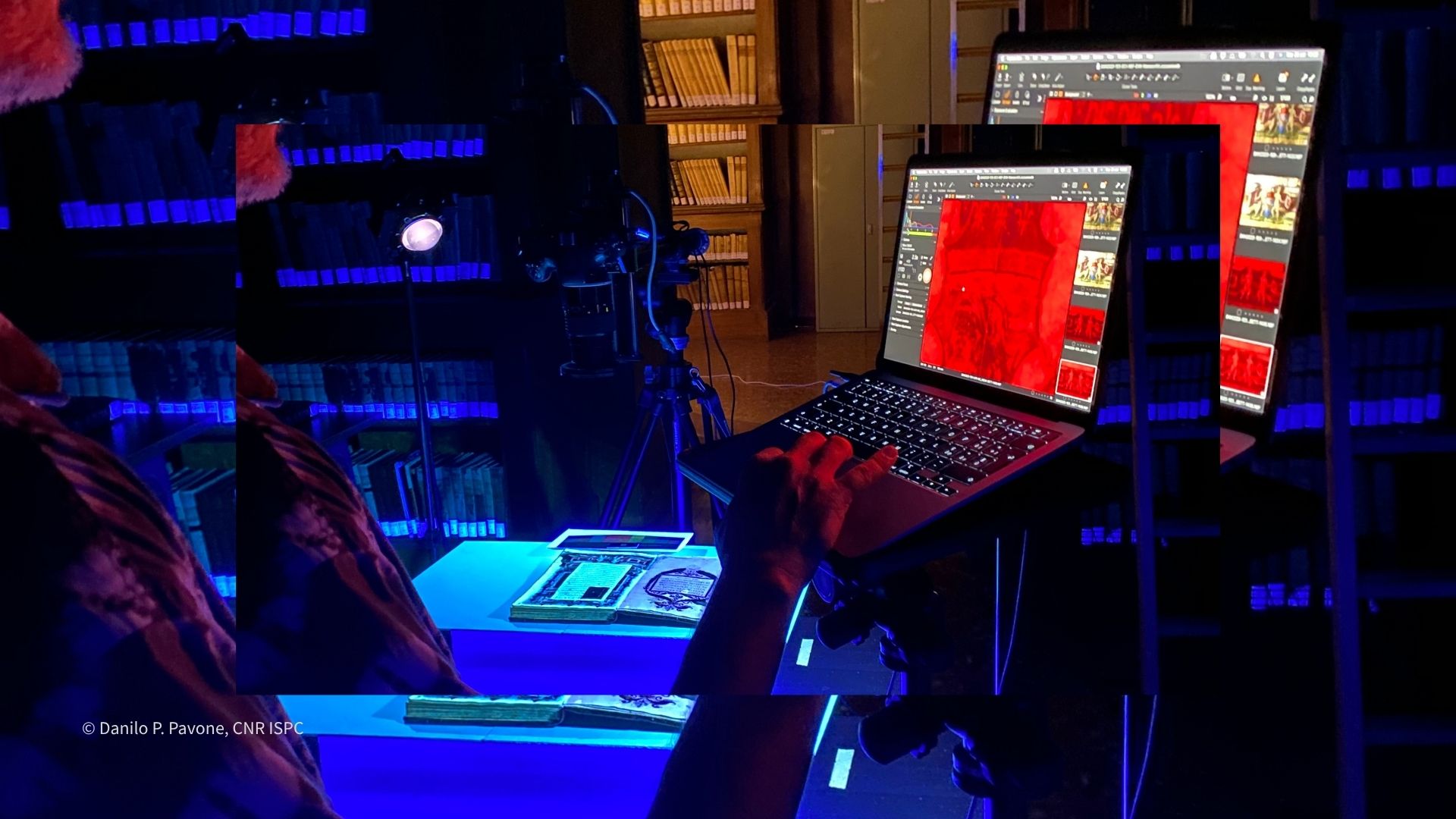
E-RIHS.it Campaign – MOLAB of the CNR ISPC Manuscripts and Archives research group. Advanced UV fluorescence techniques to reveal traces of writing invisible to normal light | © Danilo Pavone, CNR ISPC
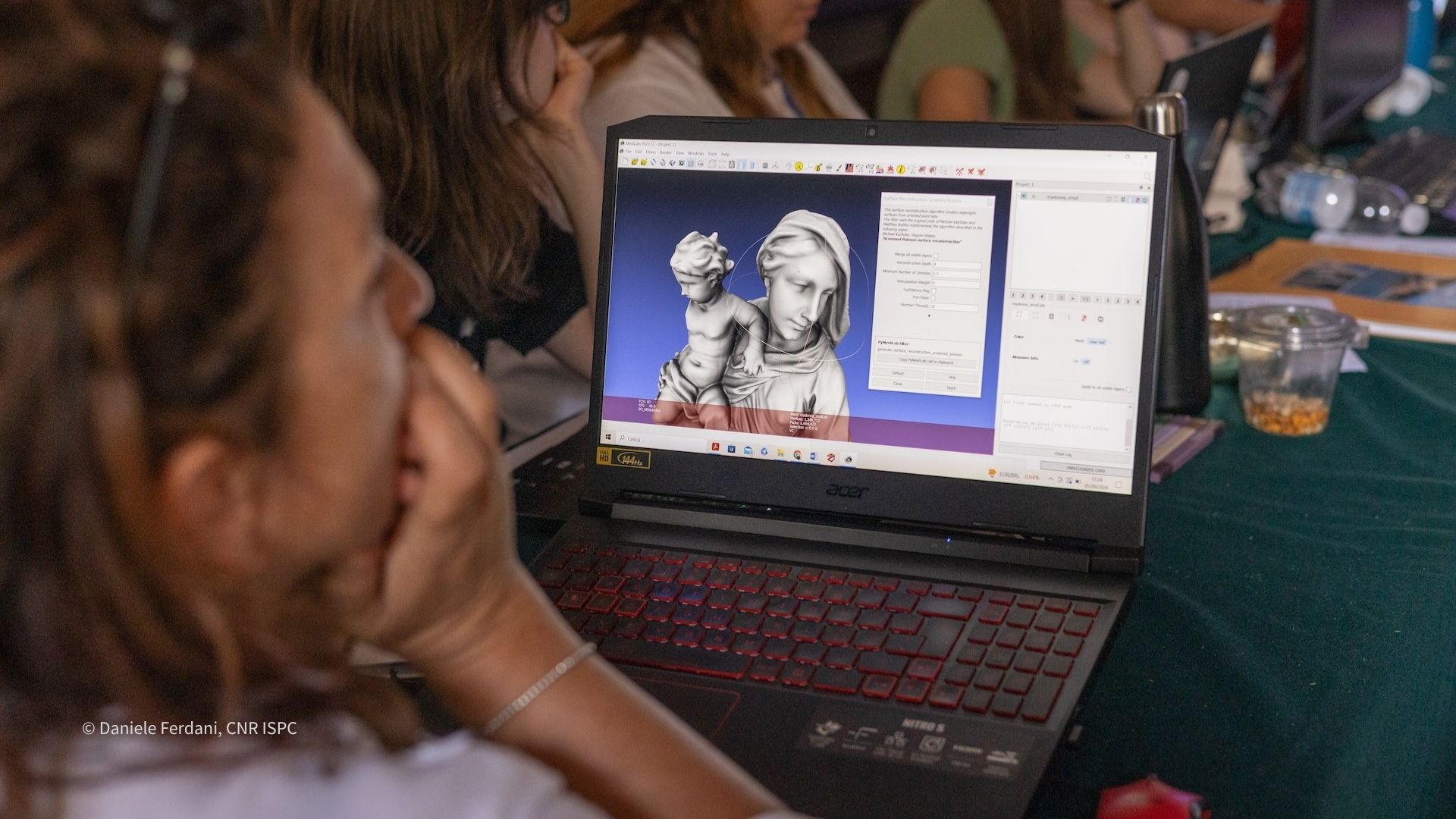
E-RIHS.it’s Digital Heritage Camp: 3D survey training at Sermoneta Castle and the Garden of Ninfa, 2024 | © Daniele Ferdani, CNR ISPC